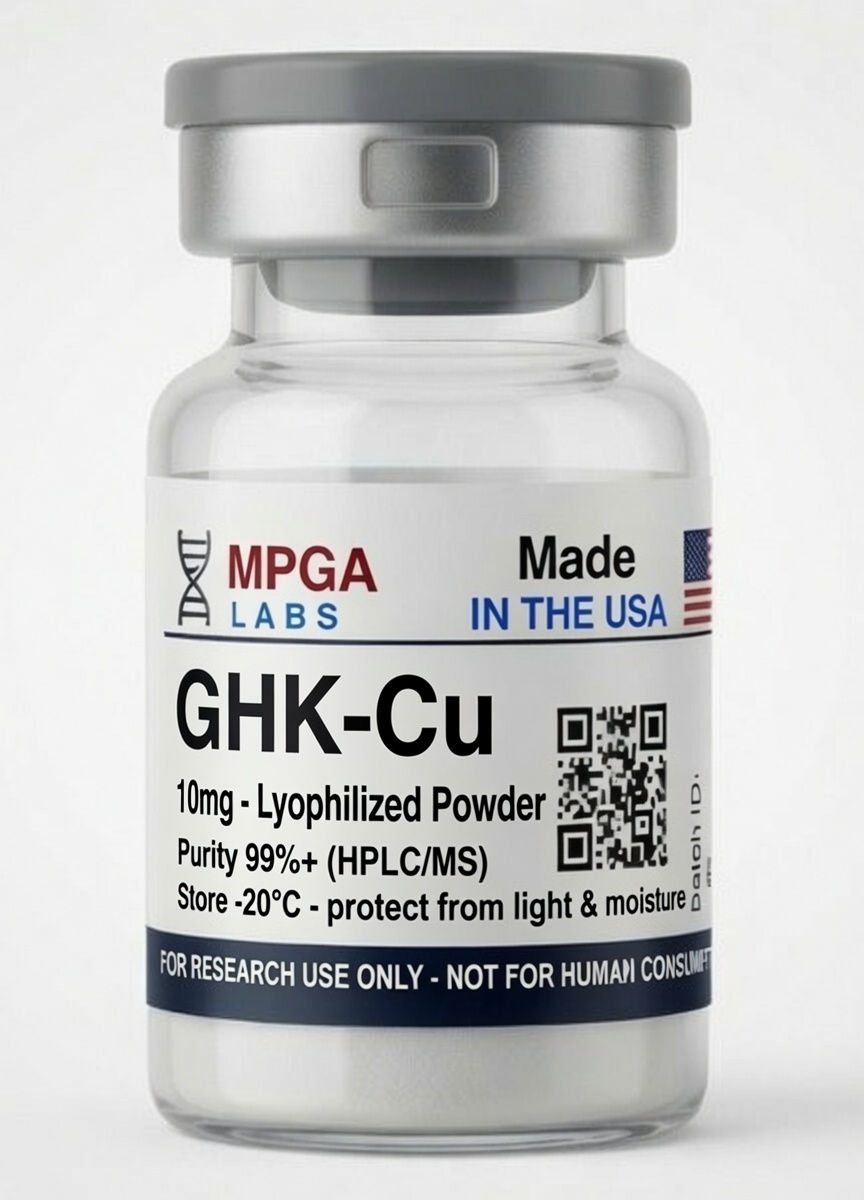
GHK-Cu
Recommended Dosage
Common wellness/research protocol: 1–2 mg subcutaneously once daily (or 0.5–1 mg twice daily). Many users start at 1 mg daily for general skin rejuvenation and anti-aging.
Other reported ranges: 2–5 mg daily for more intensive skin repair or post-procedure recovery; some protocols use 1–3 mg daily for 4–8 weeks, followed by maintenance dosing of 0.5–1 mg daily or every other day. Topical creams or serums are also common, but injectable GHK-Cu is preferred for systemic effects.
Reconstitution example (for a typical 50 mg vial): Add 5 mL bacteriostatic water (yielding 10 mg/mL). Use an insulin syringe: 1 mg ≈ 0.1 mL (10 units on U-100); 2 mg ≈ 0.2 mL (20 units). Subcutaneous injection (abdomen or thigh) is the standard route. For topical use, reconstituted solution can be applied directly or mixed into creams.
Dosing is highly individualized based on goals (skin rejuvenation, wound healing, hair support, anti-aging), body weight, and response—consult a qualified healthcare provider experienced with peptides for personalized guidance. This is for informational purposes only.
Key Potential Benefits of GHK-Cu
Powerful Skin Rejuvenation and Anti-Aging
Strongly stimulates collagen, elastin, and glycosaminoglycan production, improving skin firmness, elasticity, and thickness.
Reduces fine lines, wrinkles, and sagging while enhancing skin texture, tone, and overall radiance for a more youthful appearance.
Promotes dermal remodeling and increases skin density, often described as delivering a natural “glow” from within.
Accelerated Wound Healing and Tissue Repair
Enhances wound closure, granulation tissue formation, and skin graft success by promoting angiogenesis and cell migration.
Supports faster regeneration of damaged skin, connective tissue, and extracellular matrix after injury or procedures.
Reduces scar formation and improves the quality of healed tissue.
Anti-Inflammatory and Antioxidant Protection
Modulates inflammatory pathways, reducing chronic low-grade inflammation in skin and other tissues.
Acts as a potent copper-binding antioxidant that neutralizes free radicals and protects cells from oxidative stress.
Supports healthier skin barrier function and resilience against environmental damage.
Collagen and Connective Tissue Remodeling
Upregulates multiple genes involved in extracellular matrix production and remodeling.
Improves the structural integrity of skin, joints, blood vessels, and other connective tissues.
Helps restore youthful tissue architecture and strength over time.
Hair Growth and Scalp Health Support
Stimulates hair follicle enlargement and prolongs the anagen (growth) phase of the hair cycle.
Improves scalp circulation and reduces inflammation, potentially leading to thicker, healthier hair.
Supports overall hair vitality and may help with age-related thinning.
Broader Regenerative and Systemic Benefits
Exhibits gene-modulating, anti-aging, and cytoprotective effects across multiple tissues.
Supports vascular health, nerve regeneration, and lung tissue repair in research models.
Contributes to improved physiological resilience, reduced inflammation, and enhanced recovery capacity.
GHK-Cu (Glycyl-L-Histidyl-L-Lysine Copper) is a naturally occurring copper-binding tripeptide that declines with age and is widely used for its regenerative, anti-aging, and cosmetic properties.