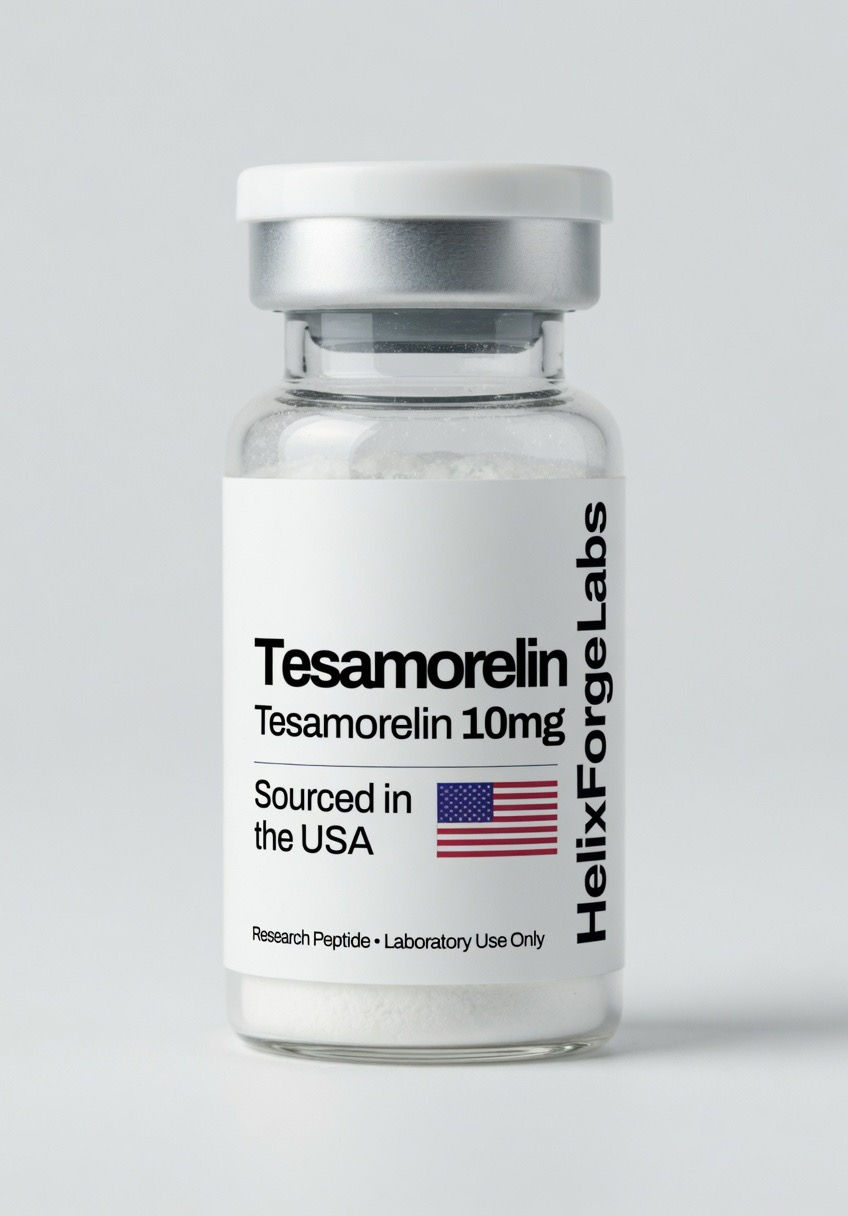
Tesamorelin
Recommended Dosage
Common wellness/research protocol: 1–2 mg subcutaneously once daily, typically injected in the evening (to align with natural GH pulses) on an empty stomach. The FDA-approved dose for its primary indication is 2 mg daily; many wellness protocols use 1–2 mg.
Other reported ranges: 1 mg daily for beginners or maintenance; 2 mg daily for more pronounced visceral fat reduction. Some users follow 5 days on / 2 days off or 3-month cycles followed by a 1–2 month break. Cycles often last 12–26 weeks or longer with IGF-1 monitoring.
Reconstitution example (for a typical 2 mg or 10 mg vial): Add bacteriostatic water as directed (e.g., 2.5 mL for certain formulations to yield convenient dosing). Use an insulin syringe: 1 mg or 2 mg dose volume depends on concentration—common is ~0.2–0.5 mL. Rotate injection sites on the abdomen. Subcutaneous injection is the standard route.
Dosing is highly individualized based on goals (visceral fat loss, body composition, metabolic support), age, IGF-1 levels, and response—consult a qualified healthcare provider experienced with peptides/hormones for personalized guidance and lab monitoring. This is for informational purposes only.
Key Potential Benefits of Tesamorelin
Targeted Reduction of Visceral Abdominal Fat
Stimulates pulsatile release of endogenous growth hormone (GH) by acting as a synthetic analog of growth hormone-releasing hormone (GHRH).
Significantly decreases visceral adipose tissue (VAT) around internal organs—often by 15–18% in studies—while having minimal impact on subcutaneous fat.
Improves waist circumference and overall abdominal contour by addressing metabolically harmful deep fat stores.
Improved Body Composition and Fat Metabolism
Enhances lipolysis and fat oxidation through elevated GH and IGF-1 levels, promoting favorable shifts in fat distribution.
Supports preservation or modest increases in lean muscle mass and muscle density during fat loss.
Contributes to better overall body composition without the broad weight loss seen with some other therapies.
Enhanced Metabolic Health and Insulin Sensitivity
Improves glucose handling, lipid profiles, and markers of metabolic function via GH-mediated pathways.
Helps counteract insulin resistance associated with excess visceral fat.
Supports broader cardiometabolic benefits, including potential improvements in liver fat and inflammatory markers.
Support for Lean Muscle Maintenance and Recovery
Promotes protein synthesis and muscle repair through natural GH pulses, helping maintain muscle during calorie restriction or aging.
Increases muscle area and density in truncal regions in research models.
Aids faster recovery from training or physical stress with improved energy utilization.
Anti-Aging and Physiological Resilience
Restores more youthful GH/IGF-1 signaling patterns that decline with age, supporting metabolic rate and vitality.
May offer additional benefits for cognitive function, skin health, and overall energy levels through optimized hormonal balance.
Enhances long-term physiological resilience by addressing visceral fat-related health risks.
Broader Wellness and Quality of Life Improvements
Reduces the burden of excess abdominal fat, improving mobility, self-image, and daily functioning.
Supports sustained metabolic health and energy balance as part of comprehensive anti-aging or body optimization protocols.
Provides a more physiological approach to GH elevation compared to direct HGH administration.
Tesamorelin is a stabilized GHRH analog designed to selectively increase natural GH secretion in a pulsatile manner, with strong clinical data primarily in visceral fat reduction.
